
Everything you ever wanted to know about a seafood boil
Where seafood boils came from
The seafood boil started in 1700s Louisiana. Acadian settlers, French-speaking and exiled from Canada, landed on the Gulf Coast and cooked the way they always had at home: one pot, whatever was cheap, whatever the river or the bay turned up that morning. The format fed a whole house at once.
The original was the crawfish boil, using local freshwater crayfish. It's still a Louisiana spring ritual today. As the dish travelled, you got regional spinoffs: the Low Country boil along the Carolina coast (shrimp and andouille sausage), the Frogmore stew further south, and eventually Australia's bag-style version, which is what we serve at Kickin'Inn. Same logic. Different delivery.
What's actually in a seafood boil
Three things make up a boil: the seafood, the fillers and the broth.
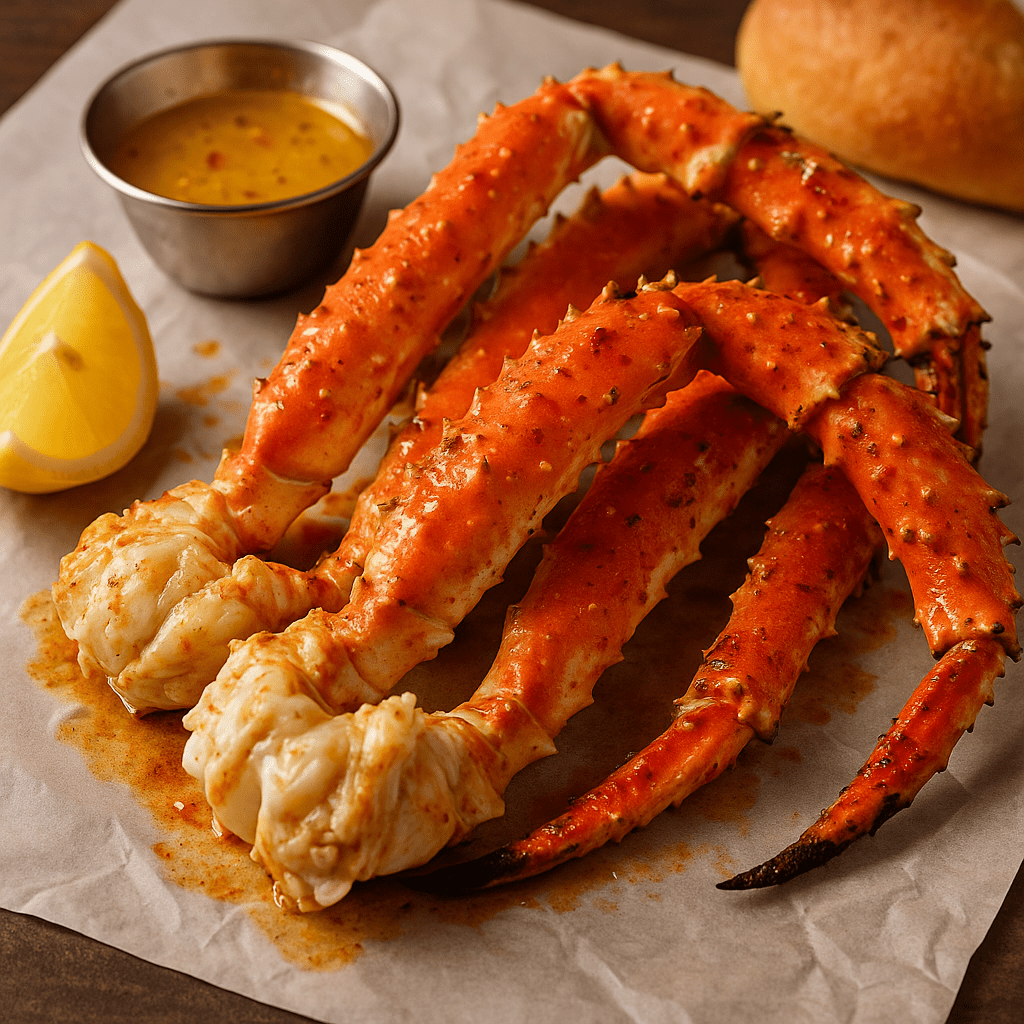
The seafood is whatever shellfish is good that day. Prawns. Mussels. Crab — could be snow or king, blue swimmer or mud crab depending on season. Lobster if you're going big. Crawfish when it's running. Some menus add calamari or octopus. The mix is the whole point: textures jump from snappy prawn shells to soft mussel meat, and you crack, peel and slurp your way through.
The fillers are corn cobs, baby potatoes and smoked sausage. Cheap, filling, and built to soak up broth. The broth itself is the soul of the thing: Cajun spices (paprika, cayenne, garlic, thyme, bay leaf), lemon, butter, and in modern versions a finishing sauce like Whole Shabang or our house Cajun butter. If you want to nerd out on the spice question, we wrote about how Cajun and Creole spice actually differ — most people get it wrong.
How a Cajun boil gets cooked
Traditionally you boil the broth first, then drop ingredients in by cook time. Potatoes and sausage go in first (10 to 12 minutes). Corn next (4 or 5 minutes). Seafood last (3 to 8 minutes depending on shell thickness). Everything finishes together, the pot gets drained, and the lot gets dumped onto a paper-lined table for everyone to dive into.
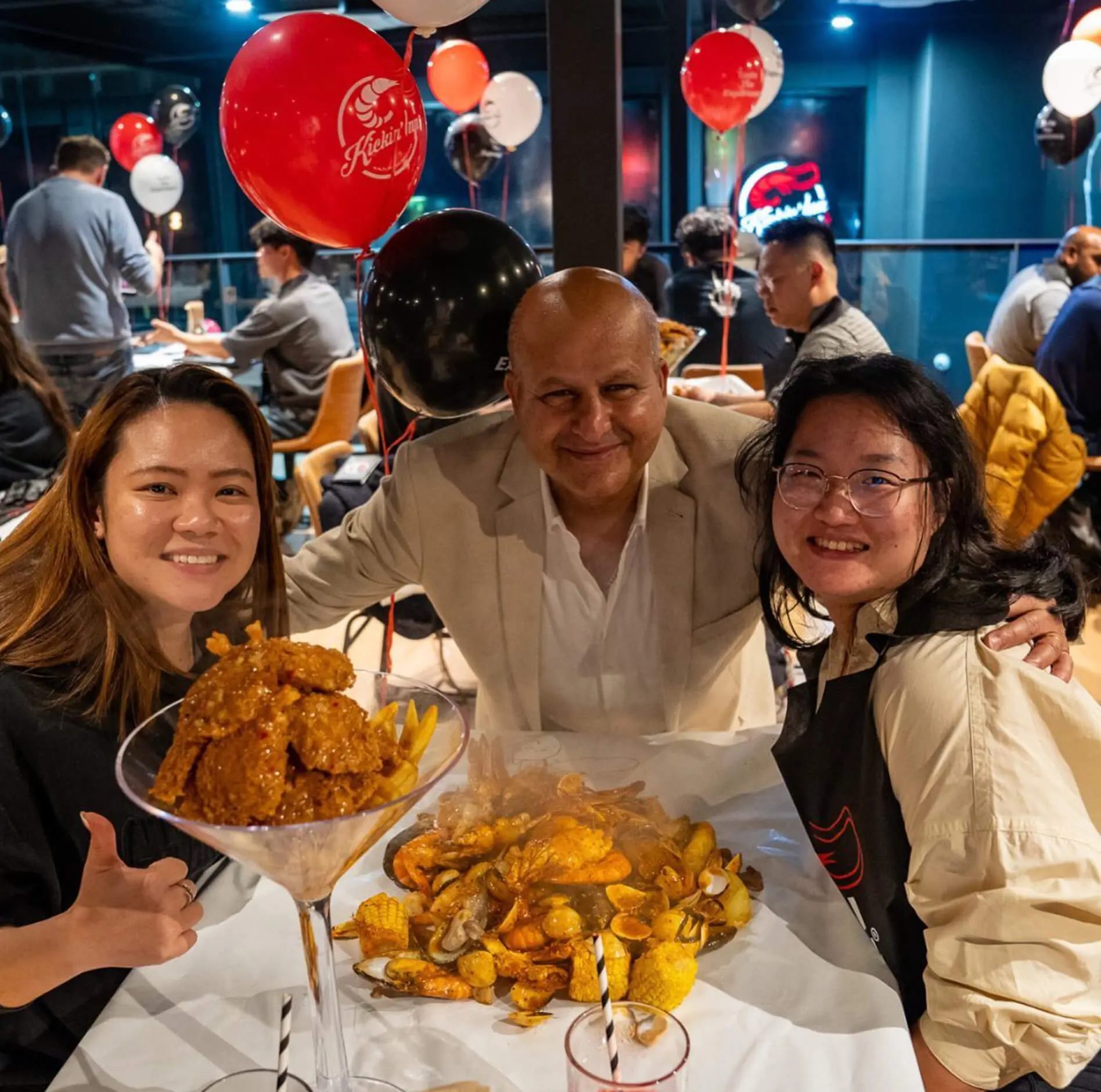
At Kickin'Inn we run the same playbook, except each diner gets their own sealed bag. The bag traps the broth, keeps steaming as it walks to the table, and gets dumped open in front of you. No spilled broth. No cold patches. Nobody fighting over the last claw at the bottom of the pot.
How Kickin'Inn ended up in Australia
Kickin'Inn opened its first Sydney restaurant in September 2018. Sami and Ravi Singh spent months recipe-testing the Cajun boil concept for an Australian palate before that opening. The breakthrough wasn't really the broth. It was the bag.
Plated, knife-and-fork seafood is a luxury format. The bag is a populist one: noisy, mess-positive, designed for groups, and built to be photographed. It solved a back-of-house problem too. One server can deliver six bags to a table in under a minute, and the bag does its own seasoning work as it walks. The Australian seafood-boil market basically grew on the back of that one format shift. We're now at 30+ restaurants across five states.
Why you eat it with your hands
You can't crack a snow crab leg cleanly with a knife. You can't pry open a mussel without a thumbnail. You can't get the broth-glazed garlic out of a prawn shell without sucking it out. The dish is built around hand-eating because hand-eating is the only way to actually get the food. (We wrote a whole piece on why eating with your hands is the point if you want the longer version.)
The bib, the gloves, the mallet, the paper table cover — that kit is functional, not theatrical. You will end up wearing some of the broth. That isn't a flaw of the experience. It is the experience.
Halal, allergies and the people we feed
Every Kickin'Inn restaurant is halal certified. That covers the broth, the sausage, the sides and the prep line. We run dedicated halal seafood landing pages for our biggest catchments because halal diners ask the question often enough that we wanted to answer it cleanly per location. Shellfish allergies are the harder conversation — the kitchen handles shellfish at every station, so cross-contact risk is real. Talk to the team before booking if anyone in your group has a serious allergy.
For big tables, birthdays, hens nights and work events, we have a functions team that handles the spice levels, dietaries and drink runs as a single brief. Members of the Birthday Club also get a free meal on their birthday at any location.
 Seafood Boil
 Sit-Down
 Cooking a Boil