Chewy squid is one of the most common kitchen disappointments going, and it is almost never the squid’s fault. 🦑
There is one rule that explains the whole dish, and once you know it the rest is just technique. Here it is, along with the coating that actually stays crisp.
The two minutes or two hours rule
This is the thing to tattoo on your brain, and every chef who works with squid knows it.
Squid needs to be cooked either very fast or very slowly. Anything in between leaves you with rubber. Two minutes in hot oil, or two hours in a stew. The middle ground is the enemy, and it is where almost all chewy squid comes from.
The reason is collagen. Brief, fierce heat sets the proteins before they have time to tighten and squeeze out moisture. Long, slow heat breaks the collagen down into gelatine and the squid turns tender again. A medium cook does the first thing without ever getting to the second.
What that means in the pan
For salt and pepper squid you are firmly in the two minute camp. Ninety seconds to two minutes in properly hot oil, and then out. If you are standing there wondering whether it needs another minute, it does not.

The buttermilk trick restaurants use
Here is a genuine trade secret that costs almost nothing.
Soak your squid in buttermilk for thirty minutes to a couple of hours before cooking. Restaurant kitchens keep calamari sitting in buttermilk for exactly this reason. The mild acidity and the enzymes tenderise the squid, and the liquid clinging to it gives seasoned flour something to grab onto.
No buttermilk in the fridge? Milk with a squeeze of lemon, left for ten minutes, does a reasonable impression. Plain yoghurt loosened with a little water also works.
Do not go beyond a few hours though. Leave squid in an acidic soak overnight and the acid starts to cure the outside, which turns the texture oddly firm and slightly opaque.
Preparing the squid
A bit of knife work that pays off in the texture.
Clean the tubes, remove the clear quill, and peel off the purple membrane if it is still on. Then slice into rings around one centimetre thick, or score the tube in a diamond pattern and cut it into flat pieces, which is the flower cut you see in restaurants. The scoring helps it curl attractively and cook evenly.
Then dry it properly. This feels contradictory after a buttermilk soak, but drain it in a colander and pat lightly so it is damp rather than dripping. Wet squid hitting hot oil drops the temperature and spits dangerously.
On buying, Sydney Fish Market publishes guidance on selecting and handling seafood. Fresh squid should smell clean and faintly sweet and look glossy rather than dull. Frozen squid is perfectly good here and is often more tender, because freezing damages the muscle structure in a way that helps.
The coating that stays crisp
This is where most home versions go soft within five minutes.
| Coating | Result | Verdict |
|---|---|---|
| Plain flour only | Pale, softens fast | Avoid on its own |
| Cornflour only | Very crisp, almost too light | Good, but can taste raw |
| Rice flour only | Crisp but very pale | Browns poorly, see below |
| Half plain, half cornflour | Crisp, browns well | The reliable choice |
| Semolina added | Extra crunch and texture | Worth a tablespoon or two |
| Wet batter | Heavy, goes soggy | Wrong dish, use for fish |
That rice flour row is worth explaining, because people follow recipes using it and then wonder why their squid came out anaemic. Rice flour genuinely does not brown well, and brand new oil browns less than oil that has been used a few times. Combine those two and you get crisp, pale, slightly sad-looking squid. Mix rice flour with a little plain flour if you want colour.
The seasoning itself is simple. Fine salt, plenty of freshly ground white and black pepper, a pinch of five spice if you like, and that is genuinely it. Season the flour, not just the finished squid.
Frying it properly
Oil temperature is the other half of the crispness equation.
- Get the oil to 180°C. Use a thermometer rather than guessing.
- Fry in small batches. Too much squid at once crashes the temperature.
- Let the oil recover between batches. Wait thirty seconds and check it again.
- Ninety seconds to two minutes, maximum. Golden, not deep brown.
- Drain on a wire rack, never paper towel. Paper traps steam and softens the bottom.
- Salt it the second it comes out. Seasoning sticks to hot, slightly oily surfaces.
- Serve immediately. This dish has a five minute window and then it is a different dish.
The rack instead of paper towel is the fix nobody expects to matter and it genuinely does. Paper towel holds the steam coming off the squid against the coating, and that steam is what turns crisp into chewy within minutes.
If you must hold it briefly, keep it on a rack in a low oven with the door slightly ajar so moisture escapes.
Safety, because hot oil deserves respect
Deep frying at home is fine if you are set up for it and genuinely dangerous if you are not.
Never fill a pan more than a third with oil, because it rises dramatically when food goes in. Keep a lid nearby to smother a flare-up, and never put water anywhere near burning oil. Lower the squid in gently with tongs or a spider rather than dropping it from height.
Food Standards Australia New Zealand notes that cooking to 70°C in the centre kills almost all harmful microorganisms, which a two minute fry at 180°C easily achieves for something as thin as squid rings.
For storage before you cook, the NSW Food Authority advises keeping seafood covered, away from other food, in the coldest part of the fridge, and temperature control guidance recommends checking with a thermometer rather than assuming.
What to serve with it
Keep it sharp and simple, because the squid is rich.
Lemon wedges are non-negotiable. A garlic aioli or a lime and chilli mayonnaise works beautifully. Fried garlic, sliced red chilli and spring onion tossed through at the end gives you the full restaurant version. A crisp Asian slaw with rice vinegar cuts the oil nicely.
And on allergies, seafood allergy is common in Australia and reactions can be severe. Squid is a mollusc rather than a crustacean, and some people react to one group and not the other, so it is worth asking specifically rather than assuming.
Or have it without the oil splatter
Deep frying at home is great and it does leave your kitchen smelling of it until Thursday.
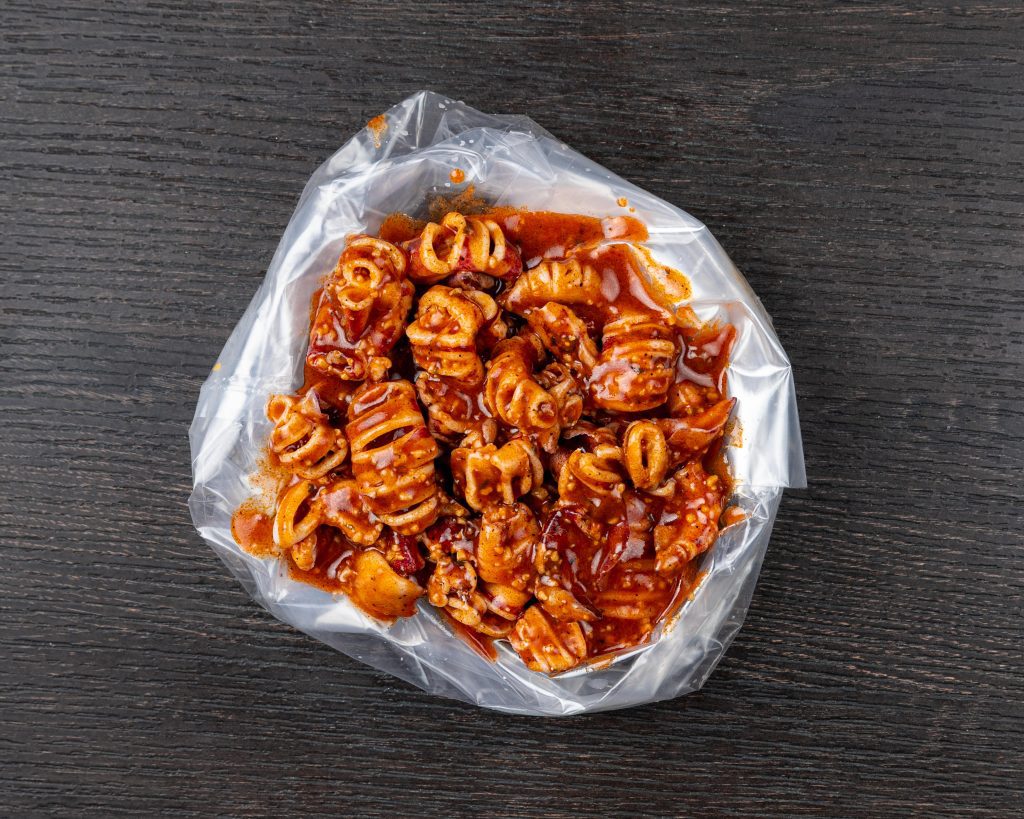
Flower cut squid is on our seafood boil menu as a build-your-own option, and it features in the Favourites Bag alongside half shelled mussels and baby octopus. Boiled in sauce rather than fried, so a different texture entirely, but it is the same sweet squid without the hot oil and the clean-up. 🔥
Pick a sauce, pick a heat level from Original to 000, and find your nearest spot on our locations page, or make a booking.
The short version
- Two minutes or two hours, never in between.
- For salt and pepper squid, ninety seconds to two minutes is the window.
- Soak in buttermilk for thirty minutes to a couple of hours to tenderise.
- Milk with lemon, or thinned yoghurt, works as a substitute.
- Do not soak overnight, or the acid starts curing the surface.
- Score the tubes for a flower cut and more even cooking.
- Drain until damp, not dripping, before flouring.
- Frozen squid is often more tender than fresh.
- Half plain flour and half cornflour is the reliable coating.
- Rice flour and brand new oil both brown poorly.
- Season the flour, not just the finished squid.
- Fry at 180°C in small batches, letting the oil recover.
- Drain on a wire rack, never paper towel.
- Salt immediately out of the oil and serve within five minutes.
- Squid is a mollusc, so ask about allergies specifically.
Buttermilk, hot oil, two minutes, wire rack. Four things, and chewy squid becomes somebody else’s problem. 🤤
Think you have what it takes to work at Kickin'Inn?
Fill out an expression of interest form here. We strive to respond to all applicants as promptly as possible. We look forward to hearing from you!