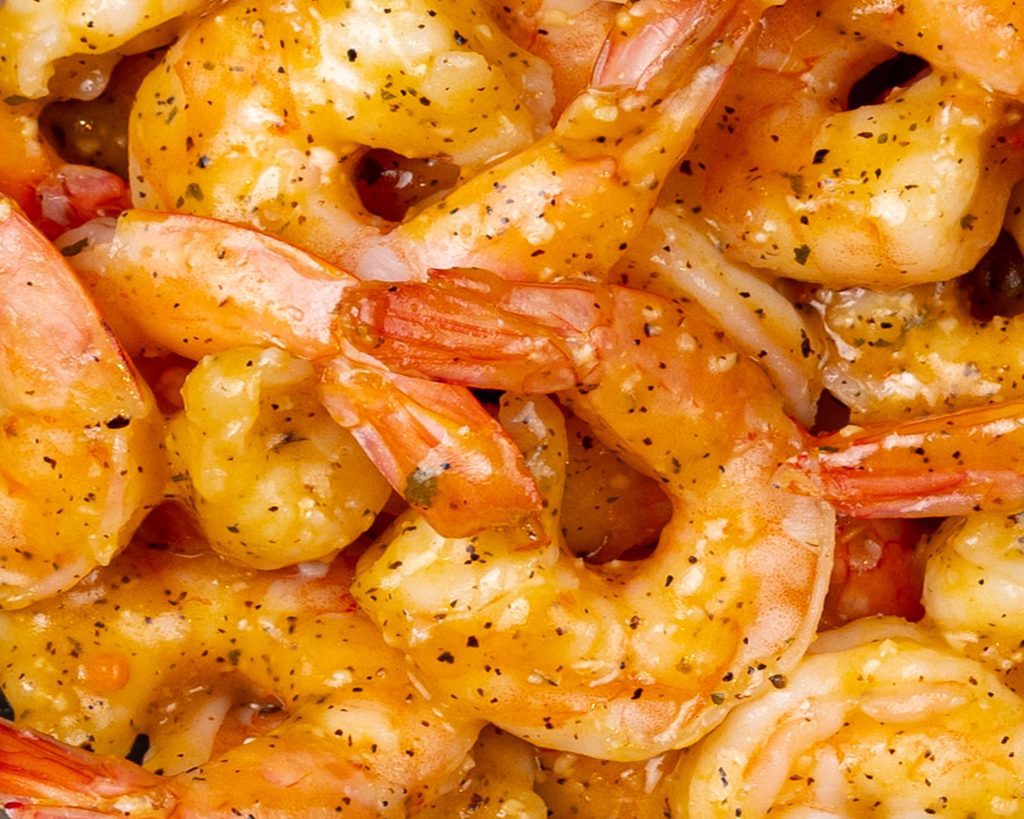
Garlic prawns are the dish every Australian household thinks it has sorted, right up until the prawns come out tough and the butter splits into a greasy puddle. 🦐
The good news is that it is a four minute cook with about three places to go wrong. Here is how to nail all three, Aussie style, with whole prawns and a sauce you will want to mop up with bread.
What makes it the Australian version
Worth saying up front, because the dish means different things in different kitchens.
The Australian pub and RSL classic is whole or peeled prawns in a garlic butter sauce, often with a splash of cream, served with rice and a crusty baguette. It is less about chilli than the Spanish gambas al ajillo and less about cheese than an Italian treatment. Garlic, butter, a bit of acid, and prawns that are still juicy.
The other thing that makes it Australian is the prawns themselves. There are five major species of Australian wild prawns, and the two questions worth asking of the prawn in front of you are whether it is wild and whether it is Australian.
That matters for flavour, not just provenance. A sweet Australian king or banana prawn needs very little help. A bland imported one needs the sauce to do all the work, and you will taste the difference.
Buying the right prawns
Half the result is decided at the fish counter, before anything hits a pan.
Buy green prawns, which is the Australian term for raw and uncooked. Already-cooked prawns are the single most common reason garlic prawns come out rubbery, because you are reheating them rather than cooking them, and there is no way back from that.
- Green, not cooked. Raw prawns are grey-green and translucent, not pink.
- Shell on if you can manage it. More flavour, and the shells make a free stock.
- Smell them. Fresh prawns smell like clean sea water, not ammonia.
- Firm heads, intact shells. Black spots at the head joint mean age.
- Frozen is genuinely fine. Most prawns are snap frozen at sea anyway.
- Think about size. Bigger prawns are far more forgiving of a second too long.
On sustainability, common wild-caught Australian species include banana prawns, tiger prawns, king prawns and endeavour prawns, and certification labels are the simplest shortcut if that matters to you.

Keep them safe before you cook them
Boring for thirty seconds, then we cook. Prawns are one of the least forgiving things in your fridge.
Thaw frozen prawns in the fridge overnight rather than on the bench or under hot water. Food Standards Australia New Zealand notes that proper cooking kills almost all harmful microorganisms, with 70°C in the centre of the food as the general benchmark.
And pat them properly dry before they go near the pan. Wet prawns steam instead of searing, which is the difference between a glossy sauce and a watery one.
The recipe
Serves four as a main with rice. Twelve minutes, start to finish.
What you need
One kilo of green prawns, peeled and deveined with tails on. Eighty grams of butter. Two tablespoons of olive oil. Six to eight cloves of garlic, finely sliced rather than crushed. Half a cup of cream, optional but traditional in the Australian version. The juice of half a lemon. A handful of chopped flat-leaf parsley. Salt and plenty of cracked black pepper. A pinch of chilli flakes if you want warmth.
The method
- Get the pan properly hot. Oil first, butter later, or the butter burns.
- Prawns in one layer, do not crowd them. Two batches beats one crowded pan every time.
- Ninety seconds a side, maximum. They are done when they turn opaque and curl into a loose C.
- Take the prawns out. This is the step people skip and it is the whole trick.
- Now the garlic, in the butter, off the heat for a moment. Thirty to forty seconds until fragrant, never brown.
- Cream in, bubble briefly, then lemon. Acid last, or it can split the sauce.
- Prawns back in for ten seconds. Just to coat, not to cook.
- Parsley, pepper, serve immediately. This dish does not wait for anyone.
That fourth step deserves repeating. Cooking the garlic with the prawns still in the pan is what gives you both burnt garlic and overcooked prawns, because garlic wants gentle heat and prawns want fierce heat. Separate them and the problem disappears.
The three ways it goes wrong
| Problem | Cause | Fix |
|---|---|---|
| Rubbery prawns | Pre-cooked prawns, or 60 seconds too long | Buy green, pull them at the C shape |
| Bitter sauce | Browned or burnt garlic | Garlic goes in after the prawns come out |
| Split, greasy sauce | Too hot when the cream or lemon went in | Lower the heat, add acid last |
| Watery sauce | Wet prawns, or a crowded pan | Pat dry, cook in batches |
| Bland | Under-salted, no acid | Salt the prawns, finish with lemon |
| Prawns curled into tight rings | Badly overcooked | A loose C is done, a tight O is too late |
That last row is the most useful doneness test in seafood cooking. A prawn relaxes into a C when it is perfectly cooked and clenches into an O when it has gone too far. Watch the shape, not the clock.
If anyone at the table has an allergy
Worth knowing properly rather than guessing, because this is a serious one.
Seafood allergy is common in Australia and reactions can be severe, and shellfish is among the most frequent triggers. Prawns are crustaceans, and someone allergic to crustaceans is usually reacting to a protein shared across prawns, crabs and lobster.
So this is not a dish to improvise around. Cook something separate rather than something adjacent, and remember that the cooking water, the oil and the pan all carry the protein. If you are catering for a mixed table, keep it genuinely separate.
Serving it, and the bread question
Rice underneath, bread on the side, and that is not negotiable in an Australian kitchen.
The sauce is the point of the dish, so you need two vehicles for it. Steamed jasmine or long grain rice soaks up the first half. A split baguette handles the rest, and the moment where somebody wipes the pan with the last crust is arguably the best part of the meal.
A green salad with a sharp vinaigrette cuts through the butter nicely. Skip anything creamy on the side, because you already have cream in the pan.
And if you have prawn shells left over, simmer them in water with an onion for twenty minutes and freeze the stock. Free flavour you would otherwise bin.
Or let somebody else do the washing up
Here is the honest trade-off. Garlic prawns at home are quick, cheap and genuinely good. What you do not get is a kilo of mixed seafood boiled in a bag, and you absolutely do get a pan to scrub.
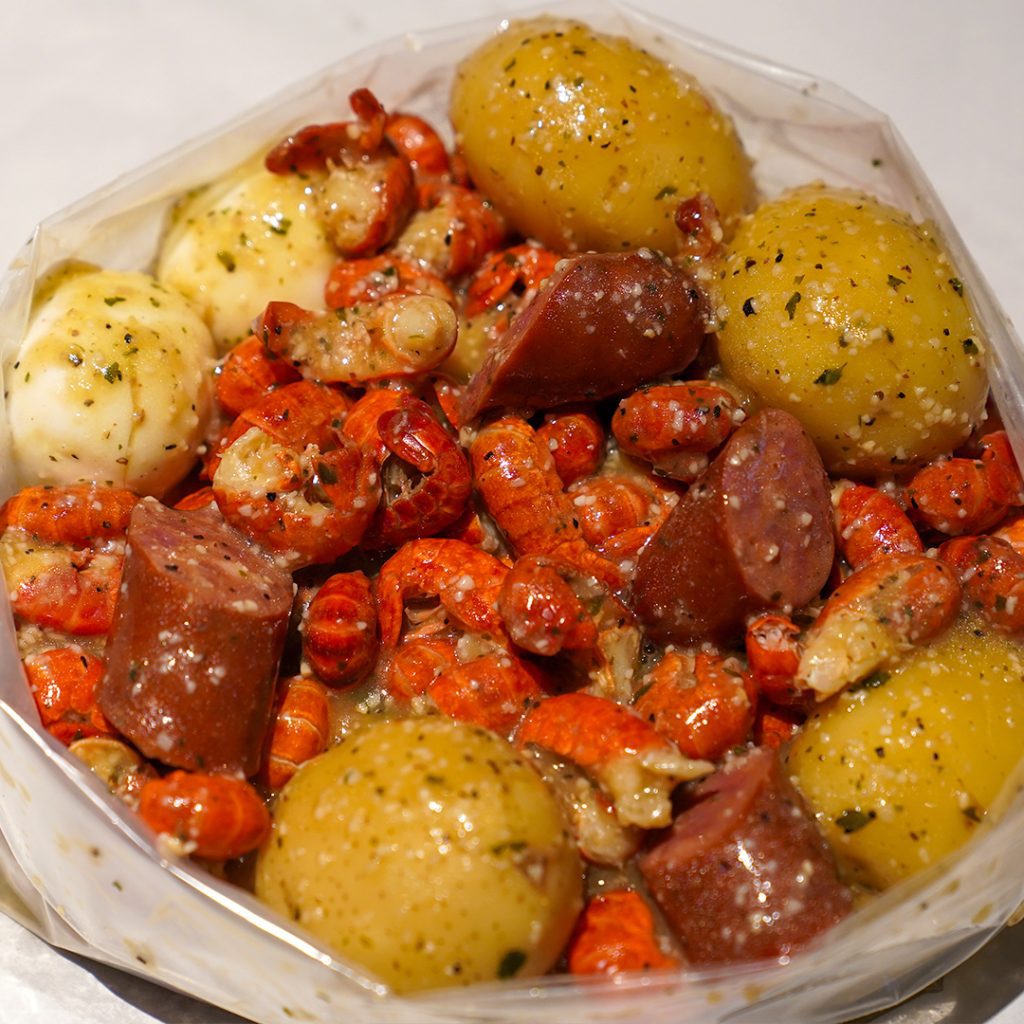
If you want the garlic butter hit without the prep, our seafood boil menu runs five Louisiana-inspired sauces, all gluten free, and Garlic Butter and Garlic Kajun are the two that scratch exactly this itch. You pick the seafood, the sauce and the heat, and it arrives in a bag already swimming in it. 🔥
You can build your own bag from whole fresh prawns, peeled prawns, mussels, baby octopus, squid, crawfish, bay bugs, lobster, blue swimmer crabs, mud crab halves, pipis or snow crab cluster, then add corn, potatoes or a baguette for mopping. Heat runs Original, Mild, Spicy, Inferno and 000, so nobody has to suffer for anybody else’s bravado.
Find your nearest spot on our locations page, or make a booking if you are bringing a crowd.
The short version
- The Australian version is garlic butter, a splash of cream, rice and bread.
- Buy green prawns, never pre-cooked, or they will be rubbery.
- Australia has five major wild prawn species, and provenance affects flavour.
- Store prawns covered, in the shell, in the coldest part of the fridge.
- Thaw in the fridge overnight, never on the bench.
- Cooking to 70°C in the centre is the general food safety benchmark.
- Pat prawns dry or they steam instead of searing.
- Slice the garlic rather than crushing it, so it burns less easily.
- Ninety seconds a side is plenty.
- Take the prawns out before you cook the garlic.
- Add lemon last, because acid can split the sauce.
- A loose C shape means done, a tight O means overcooked.
- Cook in batches rather than crowding the pan.
- Crustacean allergies are serious, so use separate pans and utensils.
- Simmer the shells for a free stock.
Get the prawns right and the rest is garlic, butter and nerve. Twelve minutes, one pan, and a baguette doing the heavy lifting. 🤤
Think you have what it takes to work at Kickin'Inn?
Fill out an expression of interest form here. We strive to respond to all applicants as promptly as possible. We look forward to hearing from you!