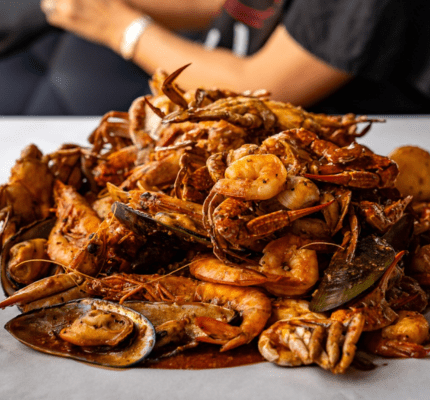
Walking into a seafood boil restaurant for the first time can feel overwhelming. The messy, hands-on eating style might seem intimidating, especially when you’re not sure how to tackle a pile of crawfish, crab legs, and prawns without looking like an amateur. Learning how to eat seafood boil properly transforms what could be an awkward experience into an enjoyable feast.
A seafood boil is a communal dining experience where shellfish, vegetables, and spices are cooked together in seasoned water, then served family-style for everyone to dig in with their hands. Studies of seafood boil traditions show this communal approach creates stronger social bonds and enhances the dining experience. The key is understanding that this isn’t fine dining – it’s meant to be fun, messy, and interactive.

This guide will walk you through everything you need to know, from basic hand techniques to advanced tips for extracting every bit of flavourful meat. You’ll discover the proper way to handle each type of shellfish, understand dining etiquette, and learn how to make the most of your first seafood boil adventure.
What Makes Seafood Boil Different From Other Dining Experiences
The fundamental difference between seafood boil dining and traditional restaurant meals lies in the hands-on approach. Using your fingers isn’t just acceptable – it’s expected and encouraged. Research on crawfish boil etiquette confirms that eating with your hands is standard practice, making the experience easier and more natural than attempting to use cutlery. This eating style developed from practical necessity, as shellfish are naturally difficult to eat with conventional utensils.
Why Hands Work Better Than Utensils
Seafood shells require specific twisting, pulling, and breaking motions that forks and knives simply can’t replicate effectively. Your hands provide the dexterity needed to:
- Apply precise pressure to crack shells without crushing the meat inside
- Feel for the natural separation points in crawfish and crab
- Control the direction of shell pieces to minimise mess
- Extract meat from irregular shell shapes and cavities
Most seafood boil restaurants provide wet wipes, paper towels, and sometimes even plastic gloves to help manage the mess. Don’t hesitate to use these tools – they’re part of the experience.
Understanding the Social Aspect
Seafood boils are inherently social meals designed for sharing and conversation. The communal style, where food is often dumped directly onto butcher paper covering the table, encourages interaction and creates a relaxed atmosphere where perfect table manners take a backseat to enjoyment. Historical accounts reveal that this dining format originated from community gatherings where fellowship was as important as the food itself.
How to Properly Eat Crawfish Step by Step
Crawfish, often called freshwater lobsters due to their similar structure, are the stars of most seafood boils. These small crustaceans require a specific technique that becomes second nature with practice.
The Head and Tail Separation Method
The most effective way to eat crawfish involves separating the head from the tail using a firm twisting motion. Professional techniques from Louisiana culinary traditions demonstrate that twisting and pulling the head away in one smooth motion is the standard method used by experienced diners. Hold the crawfish with the head pointing away from you to avoid any potential splatter from the seasoned juices inside.
- Grasp the head firmly between your thumb and forefinger
- Hold the tail section with your other hand
- Twist and pull the head away from the tail in one smooth motion
- The tail meat should remain intact and easily accessible
Extracting and Enjoying the Tail Meat
Once separated, the tail contains the primary meat portion. Pinch the sides of the tail shell and gently squeeze while pulling the meat out with your teeth. The meat should slide out cleanly if the crawfish was cooked properly – research shows that properly prepared crawfish have meat that separates easily from the shell without tearing.
Should You Suck the Head
Many seafood boil enthusiasts suck the flavourful juices from the crawfish head, which contains concentrated seasonings and natural flavours. This practice is entirely optional and depends on personal preference. The head contains the “fat” or hepatopancreas, which some consider a delicacy for its rich, intense flavour.
What Techniques Work Best for Eating Prawns
Prawns in seafood boils are typically served head-on and shell-on, requiring a different approach than the pre-peeled prawns you might be used to from other contexts.
The Vein Cut Peeling Method
Most properly prepared boil prawns have a cut along the back where the vein was removed. Professional seafood preparation guides confirm this cut provides the perfect starting point for peeling and makes the process much easier:
- Locate the cut along the prawn’s back
- Insert your thumbnail under the shell at this point
- Peel the shell away in sections, working from head to tail
- The shell should come off easily in large pieces
Handling the Head and Tail
The prawn head can be twisted off before or after peeling, depending on your preference. Some diners enjoy sucking the seasoned juices from the head, similar to crawfish. The tail can be left on as a handle or removed completely – both approaches work well.
If you choose to consume the head contents, be prepared for an intense burst of concentrated seasonings and natural prawn flavours. This part of the prawn acts like a flavour reservoir during the cooking process.
How to Crack and Eat Crab Legs Effectively
Crab legs present the biggest challenge for newcomers due to their hard shells and segmented structure. However, understanding the natural weak points makes extraction much easier.
Identifying the Best Breaking Points
Crab legs have natural joints where they separate more easily for clean breaking. Professional crab preparation techniques show that whilst the evidence on shell thickness varies, these joints definitely provide the best separation points for accessing the meat inside. Look for these joint areas – this is where you should apply pressure for the cleanest break.
| Crab Leg Section | Best Technique | Expected Result |
|---|---|---|
| Large upper segments | Bend at joint until shell cracks | Clean break exposing large meat pieces |
| Smaller lower segments | Use fingers to twist and pull | Meat slides out in one piece |
| Claw sections | Crack with provided tools if available | Access to sweet claw meat |
Extracting Maximum Meat
Properly cooked crab legs should allow the meat to slide out easily once the shell is cracked. Professional chefs emphasise that when crab is cooked correctly, the meat separates cleanly from the shell and maintains a tender, firm texture. If you’re struggling to remove meat, the crab may have been overcooked or the shell wasn’t broken at the optimal point.
Use gentle pressure and patience rather than force. Rushing the process often results in shredded meat that’s difficult to eat and less enjoyable.
What You Need to Know About Eating Mussels
Mussels in seafood boils are typically pre-cooked and should have opened shells. Any mussels with closed shells after cooking should be avoided, as this indicates they may not be safe to consume.
The Shell as a Natural Spoon
Open mussels can be eaten directly from their shells, which act as natural spoons. Simply tilt the shell and let the meat slide into your mouth, along with any accumulated cooking juices and seasonings.
Adding Butter and Seasonings
Many seafood boil setups include melted butter or additional seasonings for dipping. Mussels pair particularly well with garlic butter, as their mild flavour absorbs complementary tastes readily.
Which Vegetables and Sides Should You Tackle First
Seafood boils typically include vegetables like corn, potatoes, and sausage that have absorbed the spicy, seasoned cooking liquid. These sides serve as palate cleansers between different types of shellfish.
Strategic Eating Order
Consider starting with milder items like corn and potatoes before moving to more intensely flavoured shellfish. This approach helps you gauge the spice level and adjust your eating pace accordingly.
- Begin with vegetables to assess spice tolerance
- Move to prawns and mussels for moderate flavour intensity
- Progress to crawfish and crab for the fullest flavour experience
- Use sausage as a protein-rich palate reset between shellfish types
How to Manage Spice Levels and Heat
Seafood boils can range from mildly seasoned to intensely spicy, depending on the preparation style and your preferences. Understanding how to manage heat levels ensures an enjoyable experience rather than an overwhelming one.
What to Expect From Different Spice Levels
Most restaurants offer multiple spice levels, typically ranging from mild to extra hot. Industry standards show that each level represents a significant jump in intensity, so it’s wise to start conservatively on your first visit.
Cooling Strategies That Actually Work
If you encounter more heat than expected, certain foods and drinks provide better relief than others. Scientific research confirms that dairy products are particularly effective at neutralising capsaicin:
- Dairy products like milk or ice cream neutralise capsaicin effectively
- Starchy foods like bread or potatoes absorb excess spices
- Sweet drinks can provide temporary relief but may intensify heat afterward
- Avoid water, which can spread the spicy oils around your mouth
What Common Mistakes Should First-Timers Avoid
Several predictable pitfalls can diminish your first seafood boil experience. Understanding these common mistakes helps you navigate the meal more confidently.
Quality and Freshness Considerations
Frozen seafood boil kits often produce disappointing results compared to fresh preparations. The texture becomes mushy, and flavours don’t penetrate properly. If possible, choose restaurants that emphasise fresh ingredients over convenience products.
Sauce and Flavour Management
One effective technique involves keeping the seafood in its cooking bag rather than dumping everything onto the table immediately. Professional cooking methods show that the bag retains the seasoned cooking liquid, which serves as an excellent dipping sauce for vegetables and bread.
This approach preserves the full flavour profile and prevents the seasonings from draining away onto the table surface.
How to Make Your Experience More Enjoyable
Beyond the basic eating techniques, several strategies can elevate your seafood boil experience from good to memorable.
Preparation and Mindset
Arrive prepared for a messy, interactive meal. Wear clothes you don’t mind getting slightly stained, and remove any rings or bracelets that might interfere with shell cracking.
Embrace the communal aspect – seafood boils are meant to be social experiences where conversation flows as freely as the seasoned butter.
What to Do Next for Your Seafood Boil Adventure
Ready to put these techniques into practice? The key is starting with a restaurant that specialises in authentic seafood boil experiences, where the staff understands first-timer needs and the preparation meets quality standards.
Consider visiting during less busy times for your first experience, when staff can provide additional guidance and you can take your time mastering the techniques without feeling rushed.
What the research says about seafood boil techniques
Understanding the science behind proper seafood boil eating can help you get the most from your experience:
- Hand-eating techniques are more effective than utensils for shellfish due to the precise dexterity required for shell manipulation
- Proper cooking methods ensure meat separates cleanly from shells, making extraction straightforward when done correctly
- Communal dining formats like seafood boils have been shown to enhance social bonding and meal satisfaction
- Dairy products provide the most effective relief from capsaicin-induced heat through chemical neutralisation
- Evidence on optimal shell-cracking techniques varies, with different methods working better for different people and shell types
- Spice tolerance and enjoyment can be managed effectively through strategic food pairing and proper preparation
Key Takeaways for Seafood Boil Success
Mastering seafood boil dining comes down to embracing the hands-on nature of the meal and understanding the specific techniques for each type of shellfish. Remember that crawfish are like miniature lobsters – separate the head from tail, extract the meat, and optionally enjoy the flavourful head contents.
Prawns peel easily from the vein cut, crab legs break cleanest at their joints, and mussels should have open shells that serve as natural spoons. Most importantly, don’t worry about perfect technique on your first visit. The messy, communal nature of seafood boils means everyone understands the learning curve.
With these fundamentals in place, you’re ready to dive into your first seafood boil with confidence, knowing you can handle whatever combination of shellfish comes your way.
Think you have what it takes to work at Kickin'Inn?
Fill out an expression of interest form here. We strive to respond to all applicants as promptly as possible. We look forward to hearing from you!