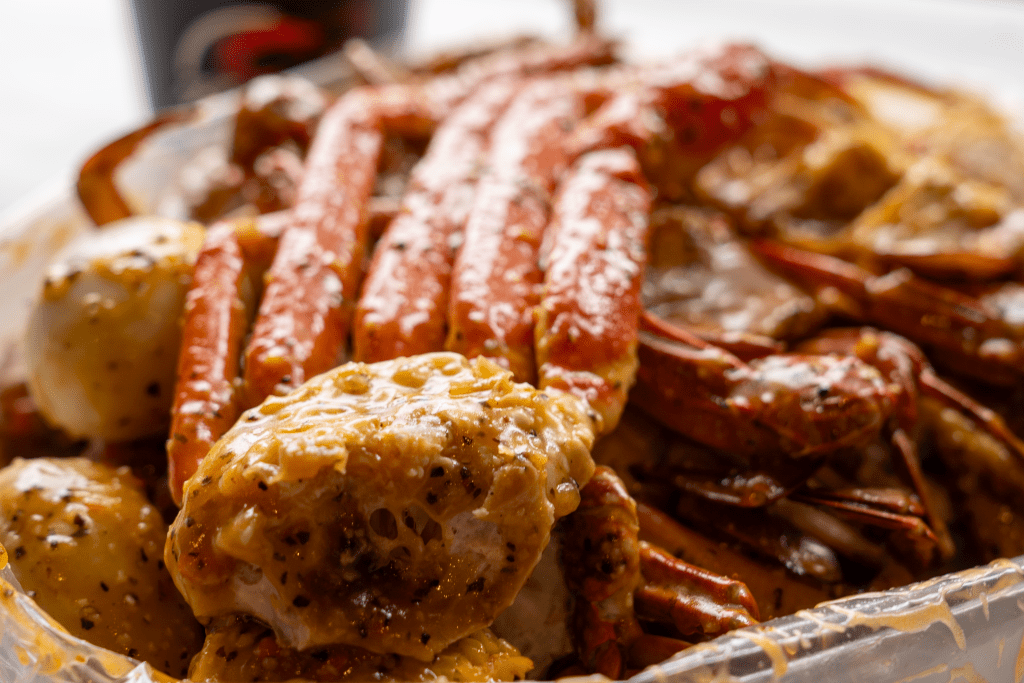
Let’s be honest – crab legs are delicious, but they can turn your dining experience into a battle zone faster than you can say “butter sauce”. If you’re tired of wrestling with shells, losing precious meat, or ending up with crab juice splattered across your shirt, you’re not alone. Learning how to cleanly eat crab legs is a game-changer that transforms frustrating shell-cracking into a smooth, satisfying feast 🦀
The good news? There are proven techniques that seafood lovers have perfected to extract maximum meat with minimum mess. Whether you’re planning a romantic dinner, family gathering, or just want to enjoy your crab without looking like you’ve been in a food fight, these methods will have you cracking shells like a pro while keeping your clothes (mostly) clean.
From the right tools to precise cracking techniques, we’ll walk through everything you need to know to make your next crab leg experience as smooth and enjoyable as possible. No more shredded meat, no more wasted chunks, and definitely no more napkin disasters.
What Makes Crab Legs So Tricky to Eat Cleanly
Why Traditional Shell Cracking Creates Such a Mess
The main culprit behind messy crab eating is the way most people approach shell cracking. Random crushing and pulling often leads to meat shredding, shell fragments flying, and juices spraying everywhere. Crab shells are designed by nature to protect the meat inside, with tough outer layers and internal cartilage that can trap and tear delicate flesh if handled incorrectly.
When you crack a shell without considering its internal structure, you’re essentially fighting against the crab’s anatomy instead of working with it. The cartilage and ligaments inside the leg segments act like anchors, and if you don’t address them properly, they’ll shred your meat as you try to extract it.
Common Mistakes That Lead to Wasted Meat
- Cracking shells randomly without targeting specific weak points
- Pulling meat out without removing internal cartilage first
- Using too much force and crushing the delicate flesh
- Not having the right tools within easy reach
- Rushing the process instead of taking a methodical approach
Understanding these pitfalls is the first step toward cleaner, more efficient crab eating. The techniques that follow address each of these issues systematically.
What Tools Do You Actually Need for Clean Crab Eating
Essential Equipment for Mess-Free Cracking
Before diving into technique, having the right tools makes all the difference. You don’t need expensive specialised equipment, but a few key items will dramatically improve your success rate.
| Tool | Purpose | Alternative Options
|
|---|---|---|
| Crab crackers or nutcracker | Controlled shell cracking | Heavy-duty kitchen shears, hammer with towel |
| Seafood fork or small pick | Extracting meat from tight spaces | Cocktail fork, thin knife tip |
| Large bowl for shells | Keeping workspace tidy | Newspaper, large plate |
| Damp towels or wet wipes | Quick hand cleaning between legs | Paper towels with water bowl |
The key is having everything within arm’s reach before you start. Nothing ruins the flow like having to hunt for tools mid-crack with buttery fingers.

How to Use the Knuckle-First Technique for Clean Meat Extraction
Why Starting with the Smallest Digit Works Best
The most reliable method for clean crab leg eating starts with a counterintuitive approach – begin with the smallest segment rather than attacking the meatiest part first. This technique works because it allows you to remove the internal cartilage and ligaments that would otherwise shred your meat during extraction.
Here’s the step-by-step process that experienced crab eaters swear by:
- Identify the knuckle joints – Look for the natural separation points where the leg segments connect
- Start with the smallest digit – Usually the thinnest part of the leg cluster
- Separate at the knuckle – Twist and pull gently to disconnect at the joint
- Remove the cartilage – The small digit often pulls out cartilage and ligaments as it separates
- Work your way to larger segments – Now the main meat sections are clear of obstructions
This method works because you’re essentially clearing the internal “anchors” before going after the main prize. It takes an extra 30 seconds per leg, but saves you from losing chunks of meat to shredding.
How to Master the Two-Crack Method for Intact Meat Removal
What Makes the Downward-Then-Upward Technique So Effective
Once you’ve cleared the cartilage using the knuckle-first method, the two-crack technique is your best bet for extracting large, intact pieces of crab meat. This approach works by creating controlled weak points in the shell rather than crushing it randomly.
The process involves making two deliberate cracks near the end of each leg segment:
- Position your crackers about 2cm from the end of the leg segment
- Make the first crack downward – Apply steady pressure to create a clean break
- Rotate and make the second crack upward – This creates a “hinge” in the shell
- Gently pull the meat out – It should slide out in one clean piece
The key is controlling your pressure. Too much force crushes the meat, while too little fails to create the necessary weak points. Practice on a few legs to get the feel for just enough pressure to crack without crushing.
When This Method Works Best and When to Try Alternatives
The two-crack method works excellently for most crab leg types, especially snow crab and king crab with firm shells. However, it’s less effective with very fresh, “juicy” crab where the meat is particularly delicate, or with older crab where the shells have become brittle.
For particularly delicate crab meat, consider the joint-breaking method as an alternative – break off the joints first, then split the shell lengthwise rather than cracking from the ends.
What Alternative Techniques Work When Standard Methods Fail
How to Use the Joint-Breaking Approach for Stubborn Shells
When the knuckle-first and two-crack methods aren’t working well – perhaps because the crab is particularly fresh or the shells are unusually tough – the joint-breaking technique offers a reliable backup approach.
This method involves:
- Breaking off all visible joints before attempting meat extraction
- Splitting the shell lengthwise rather than cracking from the ends
- Peeling the shell away in sections rather than trying to pull meat through openings
- Using gentle pressure to avoid crushing the meat inside
While this approach may take slightly longer, it’s particularly good for preserving meat integrity when dealing with very fresh crab or when you’re prioritising presentation over speed.
When to Consider Tool-Assisted Extraction
For those who struggle with manual cracking techniques, tool-assisted methods can provide a workable alternative. Using kitchen shears to cut along the shell length, or gently pressing with a rolling pin wrapped in a towel, can help extract meat without the hand strength required for traditional cracking.
However, these methods require extra care to avoid crushing the delicate meat, and many experienced crab eaters find that manual techniques ultimately prove more effective and satisfying once mastered.
How to Set Up Your Eating Environment for Minimum Mess
What Table Setup Prevents Most Common Disasters
Even perfect technique won’t help if your eating environment is working against you. Smart table setup is crucial for keeping crab juice contained and maintaining a civilised dining experience.
The ideal crab-eating setup includes:
- Large plates or shallow bowls to contain shell fragments and juices
- Individual shell disposal bowls for each diner
- Plenty of napkins or paper towels within easy reach
- Small bowls of warm water for finger cleaning between legs
- Bibs or old clothes for serious crab sessions
Position everything before you start eating. Once your hands are buttery and shell-covered, reaching for distant napkins becomes a recipe for spreading mess rather than containing it.
How Professional Seafood Restaurants Handle Crab Service
Professional seafood establishments have perfected the art of crab service to minimise mess while maximising enjoyment. They typically provide lined tables or disposable tablecloths, individual tool sets, and strategic placement of cleaning stations.
The key insight from professional service is the importance of having multiple “clean zones” – areas where you can place clean tools, fresh napkins, and drinks away from the active shell-cracking area. This prevents cross-contamination and keeps your dining experience pleasant throughout the meal.
What to Do When You Want to Enjoy Crab Without the Work
Sometimes you want all the flavour of fresh crab without the technique mastery and potential mess. That’s where the magic of a proper seafood boil experience comes in – where the messy fun is part of the charm, and you’re equipped with all the right tools, bibs, and atmosphere to make crab cracking an event rather than a chore 🤤
The beauty of a dedicated seafood restaurant is that they’ve mastered not just the cooking, but the entire crab-eating experience. From pre-cracked options to perfectly steamed legs that crack cleanly, to tables designed for messy eating with proper drainage and easy cleanup.
Plus, when you’re dining with friends and family, the shared experience of learning together (and maybe making a bit of controlled mess) becomes part of the fun rather than a source of stress. There’s something liberating about embracing the hands-on nature of crab eating in an environment designed for exactly that purpose.
Key Takeaways for Mastering Clean Crab Eating
Learning to eat crab legs cleanly is about working with the crab’s anatomy rather than fighting against it. The knuckle-first technique for removing cartilage, followed by the two-crack method for clean extraction, will handle most situations effectively. When these don’t work, joint-breaking provides a reliable alternative.
Remember that proper setup is as important as proper technique. Having the right tools within reach, adequate workspace, and smart cleanup strategies makes the difference between a frustrating mess and an enjoyable feast.
Most importantly, don’t let the fear of mess prevent you from enjoying one of the ocean’s greatest delicacies. With these techniques in your toolkit, you can confidently tackle any crab leg while keeping your dignity (and your clothes) mostly intact.
Think you have what it takes to work at Kickin'Inn?
Fill out an expression of interest form here. We strive to respond to all applicants as promptly as possible. We look forward to hearing from you!