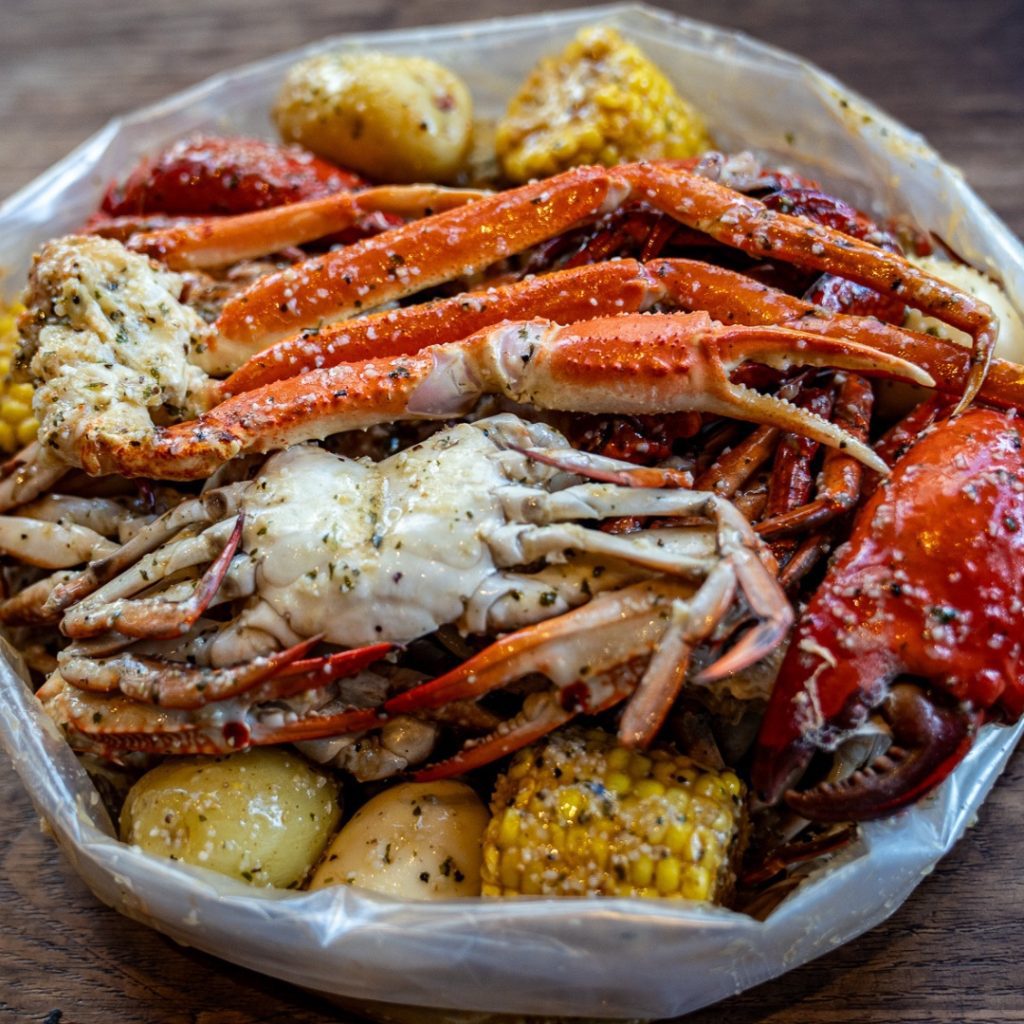
Crab is the seafood people buy with real enthusiasm and then stare at on the bench, because it is not obvious what to actually do with it. 🦀
The first thing to establish is something most recipes skip entirely, and it changes everything about how you approach the cook.
Your crab is probably already cooked
This is the single most useful thing to know, and almost nobody mentions it.
Most crab sold in Australia, particularly snow crab clusters and king crab legs, is cooked immediately after it comes off the boat and then snap frozen. The same is often true of blue swimmer and mud crab sold at a seafood counter. So what you are doing at home is usually reheating rather than cooking.
That reframes the whole job. You are not trying to cook the meat through, you are trying to warm it without drying it out and without making it stringy. Treating pre-cooked crab like raw crab is exactly how people end up with expensive, disappointing mush.
So ask the question
At the counter, ask whether it is green or cooked. Green means raw. If it is cooked, your cooking times drop dramatically and gentle heat becomes the goal rather than a rolling boil.

If it genuinely is raw
Then boiling or steaming is the simplest and best approach, and simple is genuinely better here.
Bring a large pot of well-salted water to the boil, roughly a 2% salt to water ratio, which is about 20 grams per litre. Work on around eight minutes per 450 grams of crab. Then plunge it straight into iced water to stop the cooking, which is the step that keeps the meat from carrying on cooking in its own residual heat.
Eaten like that, with rice and a squeeze of lemon, good crab needs very little. A lot of experienced cooks argue that heavy sauces on premium crab are a way of hiding mediocre product, and there is something to that. If you have paid for excellent crab, taste it plain first before you decide what to do with it.
The three dishes compared
| Dish | Best crab for it | Honest verdict |
|---|---|---|
| Singapore chilli crab | Mud crab or blue swimmer, in shell | Messiest and most fun, needs whole crab |
| Crab cakes | Picked meat, any variety | Best use of leftover or cheaper meat |
| Crab rangoon | Picked meat, or tinned at a pinch | Easiest, and not remotely authentic |
| Plain, with lemon | Premium snow or king crab | The right call for expensive crab |
| Worst use of premium crab | Anything deep fried | You are paying for flavour you then hide |
| Best for a crowd | Chilli crab | One wok, everyone digs in |
Note the fifth row, because it is the most useful piece of advice here. Deep frying or heavily spicing a premium crab is a waste of money. Save the good stuff for simple preparations and use cheaper picked meat for cakes and rangoon.
Singapore chilli crab, the messy one
Worth the effort and genuinely the most fun thing you can do with a whole crab.
Chop the crab into pieces through the joints, cracking the claws so the sauce can get in. Fry a paste of garlic, ginger, red chilli and shallot, add tomato passata and a good dollop of sweet chilli sauce, a splash of soy and a little sugar. Let it bubble, add the crab, cover and let it steam in the sauce for six to eight minutes if raw, or two to three if pre-cooked.
The finishing move is an egg, beaten and stirred through the sauce at the end off the heat, which gives it that silky ribboned texture. Serve with mantou buns or plain white bread for mopping, and put a bowl on the table for shells.
Crack the claws before they go in rather than after. Trying to crack a sauce-covered claw at the table is how your kitchen ends up redecorated.
Crab cakes, the sensible one
The rule here is restraint. A good crab cake is crab held together by the minimum necessary, not a fishcake with crab in it.
Picked crab meat, a little mayonnaise, one egg, a tablespoon or two of fine breadcrumbs, dijon, lemon zest, chopped chives, salt and pepper. Mix gently with a fork so you keep some texture rather than pulverising it. Then chill the mixture for at least thirty minutes before shaping, which is the step that stops them falling apart in the pan.
Shallow fry in butter and oil, three to four minutes a side, and do not move them while the crust forms. Squeeze lemon over at the end.
If the mix feels too wet, add breadcrumbs a teaspoon at a time rather than a handful. Too much filler is the most common crab cake failure, and it is irreversible.
Crab rangoon, and let us be honest about it
Crab rangoon is cream cheese and crab in a fried wonton wrapper. It is an American-Chinese invention rather than a traditional Asian dish, and it is delicious precisely because it makes no attempt to be refined.
Mix cream cheese with picked crab, spring onion, a little garlic powder and a dash of worcestershire. Spoon into wonton wrappers, wet the edges, seal into triangles or purses, and fry at around 180°C for two to three minutes until golden.
Two practical notes. Do not overfill, or they burst and you lose the filling into the oil. And drain them on a rack rather than paper towel, which keeps the bottoms crisp instead of steaming them soft.
This is the dish to use tinned or cheaper crab in. Nobody is tasting the subtlety of a mud crab through cream cheese and deep frying, and pretending otherwise is how you waste good seafood.
Buying, storing and the safety bit
Crab is high value and spoils quickly, so this is worth getting right.
Sydney Fish Market publishes guidance on buying and handling seafood, and the basics are straightforward. A live crab should be lively and feel heavy for its size. Cooked crab should smell sweet and of the sea, never of ammonia.
On the cooling side, potentially hazardous food you intend to keep should be cooled to 5°C or colder as quickly as possible, and a thermometer is the only reliable way to check temperatures rather than guessing.
Picked crab meat is the most perishable form, so use it the day you pick it or the day after at the latest.
Allergies, briefly but seriously
Seafood allergy is common in Australia and reactions can be severe. Crab is a crustacean, sharing trigger proteins with prawns and lobster, so anyone reacting to one will usually react to all three.
Crab rangoon deserves a specific mention, because it looks like a harmless fried dumpling and contains both shellfish and dairy. If you are putting a plate of them out at a party, say what is in them.
Or let us do the cracking
Cooking crab at home is satisfying and it is a genuine commitment of time, newspaper and mallet work.
If you want the crab without the demolition job, our seafood boil menu has blue swimmer crabs, mud crab halves and snow crab cluster you can drop into a build-your-own bag, or take the Kickin’ Mixed Bag® which brings prawns, mussels, crab, octopus and pipis together for three to four people.
Five Louisiana-inspired sauces, all gluten free, and heat from Original to 000. Bibs provided, shells our problem. 🔥 Find a venue on our locations page or sort a group on our functions page.
The short version
- Most crab sold here is already cooked and snap frozen.
- That means you are reheating, not cooking, so times are short.
- Ask at the counter whether it is green or cooked.
- For raw crab, boil in 2% salted water, around 8 minutes per 450g.
- Plunge into iced water afterwards to stop the cooking.
- Premium crab is best plain, with lemon and rice.
- Heavy sauces on expensive crab waste what you paid for.
- Chilli crab needs whole crab, with claws cracked before cooking.
- Finish chilli crab with beaten egg off the heat.
- Crab cakes need minimal filler and a 30 minute chill before shaping.
- Add breadcrumbs a teaspoon at a time, never a handful.
- Crab rangoon is American-Chinese, and the right place for cheaper meat.
- Drain fried food on a rack, not paper towel.
- Use picked crab meat within a day.
- Crab shares allergen proteins with prawns and lobster.
Find out whether it is cooked, match the dish to the quality of the crab, and keep the good stuff simple. That is most of it. 🤤
Think you have what it takes to work at Kickin'Inn?
Fill out an expression of interest form here. We strive to respond to all applicants as promptly as possible. We look forward to hearing from you!