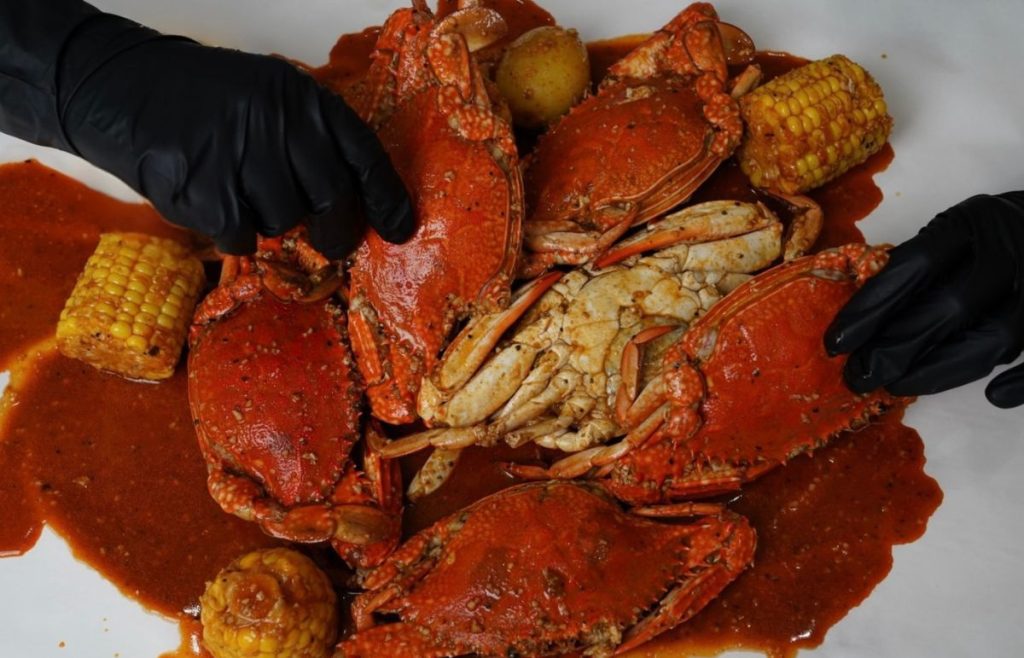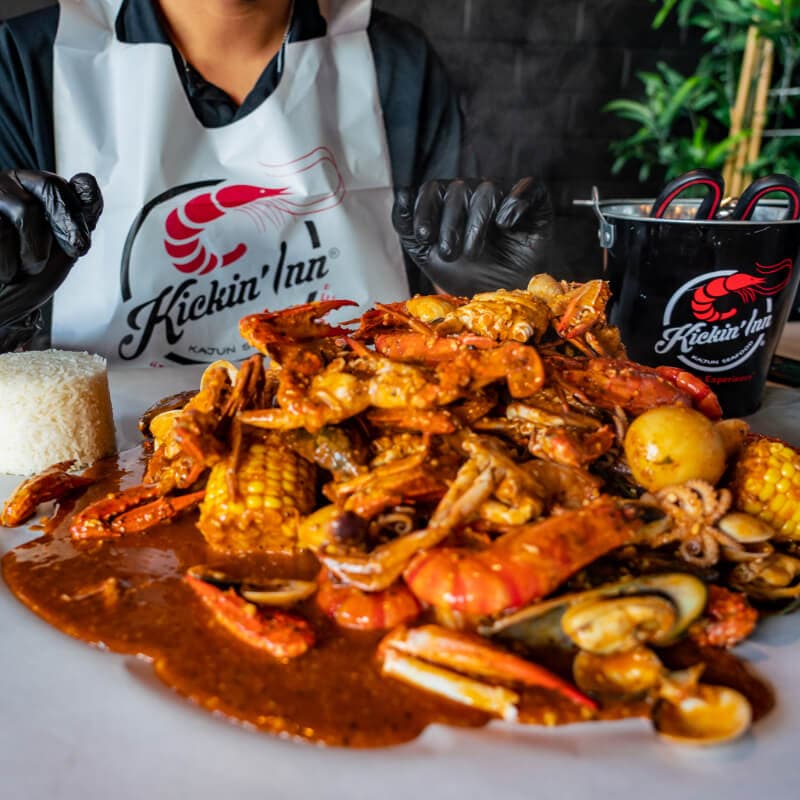
If you’ve ever visited a seafood restaurant specialising in messy, hands-on dishes like crab boils or seafood platters, you’ve likely been offered plastic bibs and disposable gloves. While some diners wonder if these accessories are necessary, there are practical reasons why restaurants provide seafood bibs and gloves to enhance your dining experience.
These protective items serve multiple purposes, from keeping your clothes clean to making the meal more enjoyable overall. Understanding when and why to use them can help you make the most of your seafood dining adventure, whether you’re tackling a spicy Cajun boil or cracking into fresh mud crabs.
Let’s explore the practical benefits of restaurant-provided bibs and gloves, and discover how they can transform a potentially messy meal into a comfortable, stress-free experience.
What Makes Seafood Dining So Messy
Seafood dining, particularly dishes like boils and platters, presents unique challenges that don’t exist with other types of cuisine. Research from dining establishments confirms that seafood boils are designed to be eaten with your hands rather than cutlery, making hands-on eating techniques inevitable and often leading to sauce-covered fingers and splattered clothing.
Why Seafood Requires Direct Hand Contact
Many seafood dishes are designed to be eaten with your hands rather than traditional cutlery. Cracking crab shells, peeling prawns, and extracting meat from lobster claws all require direct manipulation that utensils simply cannot accomplish effectively. This hands-on approach is part of the authentic seafood dining experience but inevitably leads to messy situations.
The irregular shapes and hard shells of crustaceans make them particularly challenging to navigate cleanly. Unlike a simple piece of grilled fish that can be eaten with a fork and knife, items like mud crabs and Moreton Bay bugs require strategic cracking and picking to access the sweet meat inside.
How Sauces Amplify the Mess Factor
Seafood boils and many seafood preparations feature rich, flavourful sauces that coat both the seafood and your hands. These sauces often contain oils, butter, and spices that can easily transfer to clothing and leave lingering odours on skin.
The combination of sauce-covered seafood and hands-on eating creates a perfect storm for potential mess. Without proper protection, diners may find themselves constantly wiping their hands or worrying about staining their clothes, which detracts from the enjoyment of the meal.
What Protection Do Bibs and Gloves Actually Provide
Restaurant-provided bibs and gloves offer comprehensive protection that addresses the main challenges of seafood dining. Each item serves specific functions that work together to create a more comfortable eating experience.
How Bibs Protect Your Clothing
Industry suppliers confirm that plastic bibs create an effective barrier between messy seafood and your clothing, protecting everything from casual shirts to formal wear. They’re particularly effective against sauce splatters that can occur when cracking shells or when sauce drips during eating.
The coverage area of a properly sized bib extends from your chest to your lap, protecting the areas most likely to be affected by food spillage. This protection is especially valuable when wearing light-coloured clothing or garments that require dry cleaning.
What Gloves Accomplish Beyond Basic Cleanliness
Disposable gloves serve multiple purposes beyond simply keeping your hands clean. Kitchen safety experts note that gloves provide a barrier of protection against lingering seafood odours, which can be particularly important when handling items like prawns or fish with strong natural scents.
Gloves also offer improved grip when handling slippery, sauce-covered seafood. The textured surface of many disposable gloves provides better traction than bare skin, making it easier to crack shells and manipulate small pieces of food.
For diners with longer fingernails or nail enhancements, gloves provide essential protection against damage that could occur when cracking hard shells or picking at tough seafood components.
When Should You Accept Restaurant Bibs and Gloves
While bibs and gloves are always optional, certain dining scenarios make their use particularly beneficial. Understanding these situations can help you make informed decisions about when to accept these accessories.
Which Dishes Benefit Most from Protection
Seafood boils represent the messiest category of seafood dining and almost always warrant the use of both bibs and gloves. Studies of seafood dining practices show that these dishes typically feature multiple types of seafood cooked together in heavily spiced sauces, creating maximum potential for mess, though restaurant practices for providing protective accessories can vary.
- Whole mud crabs and blue swimmer crabs that require extensive shell cracking
- Prawns served with heads and shells intact
- Lobster or bugs that need to be broken apart by hand
- Mixed seafood platters with multiple sauce-heavy components
- Cajun or Asian-style preparations with rich, oily sauces
Simpler seafood preparations like grilled fish fillets or pre-peeled prawns generally don’t require protective accessories, as they can be eaten cleanly with standard cutlery, though the evidence on mess levels varies depending on preparation methods and sauce usage.
What Clothing Considerations Matter Most
Your clothing choice should influence your decision to use protective accessories. Light-coloured garments, silk or delicate fabrics, and formal business attire all benefit significantly from bib protection.
Consider accepting a bib regardless of your clothing if you’re dining before an important meeting, social event, or any situation where appearance matters. The small inconvenience of wearing a plastic bib is minimal compared to the potential embarrassment of sauce stains.
How Different Types of Seafood Affect Your Need for Protection
Not all seafood dishes present equal challenges when it comes to mess potential. Understanding the characteristics of different seafood types can help you anticipate your protection needs.
Which Crustaceans Create the Most Mess
| Seafood Type | Mess Level | Main Challenges | Recommended Protection |
|---|---|---|---|
| Whole Mud Crabs | Very High | Hard shells, lots of sauce contact | Both bib and gloves |
| Prawns with Heads | High | Peeling shells, potential splashing | Gloves recommended |
| Lobster Tails | Medium | Shell cracking, butter dipping | Bib for formal clothing |
| Mussels in Sauce | Medium | Sauce dripping, shell handling | Bib recommended |
| Grilled Fish Fillets | Low | Minimal sauce, fork-friendly | Usually unnecessary |
How Cooking Methods Impact Mess Potential
The preparation method significantly affects how messy your seafood dining experience will be. Boiled and sauced preparations create the highest mess potential, while grilled and simply prepared dishes tend to be much cleaner.
Dishes served in heavy cream or butter sauces pose particular challenges, as these sauces readily transfer to hands and clothing. Dry-rubbed or simply grilled preparations are generally much easier to eat cleanly.
What Hygiene Benefits Do Restaurant Accessories Provide
Beyond mess prevention, bibs and gloves offer genuine hygiene advantages that can enhance your dining experience and peace of mind.
How Gloves Prevent Odour Transfer
One of the most practical benefits of using gloves during seafood dining is preventing fishy or oceanic odours from lingering on your hands, though the evidence on effectiveness varies depending on the type of seafood and preparation method. These scents can be particularly persistent and may remain noticeable even after thorough hand washing.
This odour prevention is especially valuable for business diners or anyone who needs to interact with others shortly after their meal. The barrier provided by disposable gloves ensures that handshakes and other social interactions aren’t affected by lingering seafood scents.
What Protection Gloves Offer Against Shell Cuts
Sharp shell edges on crabs, lobsters, and other crustaceans can cause small cuts or scratches on unprotected hands. While these injuries are typically minor, they can be uncomfortable and may introduce bacteria from the seafood environment.
Disposable gloves provide a barrier against these sharp edges, allowing you to crack shells and handle seafood more aggressively without concern for minor injuries. This protection is particularly valuable for diners who aren’t experienced with hands-on seafood preparation.
How Social and Cultural Factors Influence Accessory Use
The decision to use bibs and gloves can be influenced by social situations and cultural backgrounds, with different dining contexts calling for different approaches.
What Business Dining Situations Require
Professional dining situations often warrant the use of protective accessories regardless of personal preference. The potential embarrassment of sauce stains or lingering odours can negatively impact business relationships and professional image.
In these contexts, accepting restaurant-provided protection demonstrates practical thinking and consideration for the dining environment. Most business companions will appreciate that you’re taking steps to maintain a professional appearance throughout the meal.
How Casual Dining Differs from Formal Settings
Casual seafood dining with friends or family allows for more flexibility in accessory use. Some diners prefer the authentic, hands-on experience without barriers, while others appreciate the convenience and cleanliness that gloves and bibs provide.
The key is matching your choice to the overall atmosphere and your personal comfort level. There’s no wrong choice in casual settings, as long as you’re prepared for the potential consequences of your decision.
What Alternatives Exist to Restaurant-Provided Accessories
While restaurants typically provide standard plastic bibs and disposable gloves, some diners prefer to bring their own alternatives or use different strategies for managing seafood meals.
How Personal Napkin Strategies Can Work
Some experienced seafood diners prefer to use multiple paper napkins strategically placed to protect clothing and provide frequent hand cleaning opportunities. This approach requires more attention but can be effective for lighter seafood preparations.
The napkin strategy works best when combined with frequent hand washing breaks and careful eating techniques. However, it’s less effective for heavily sauced dishes or particularly messy preparations like whole crab boils.
What Clothing Choices Minimise Protection Needs
Selecting appropriate clothing can reduce your reliance on protective accessories. Dark-coloured garments, washable fabrics, and casual styling all make seafood dining more forgiving.
- Choose darker colours that won’t show sauce stains as readily
- Opt for machine-washable fabrics over dry-clean-only materials
- Avoid wearing expensive or delicate items to seafood restaurants
- Consider bringing a change of shirt for important post-dinner events
How to Make the Most of Your Protected Seafood Experience
Once you’ve decided to use restaurant-provided bibs and gloves, certain techniques can help you maximise their effectiveness and enjoy your meal more fully.
What Proper Glove Technique Involves
Effective glove use goes beyond simply putting them on your hands. Ensure the gloves fit properly without being too tight or loose, as either condition can interfere with your ability to handle food effectively.
Change gloves if they become heavily soiled or torn during the meal. Most restaurants are happy to provide additional protective accessories when needed, and fresh gloves maintain both hygiene and dexterity.
When removing gloves, do so carefully to avoid transferring any sauce or seafood residue to your hands or clothing. Turn them inside out as you remove them and dispose of them properly.
How to Position Bibs for Maximum Protection
Proper bib positioning is crucial for effective protection. The bib should cover your chest and lap area completely, with the neck strap comfortably secure but not restrictive.
Adjust the bib to ensure it lies flat against your body without gaps where sauce could splash underneath. If you’re leaning forward to eat, make sure the bib coverage extends appropriately to protect your lap and legs.
What the Research Says About Seafood Dining Protection
Evidence from restaurant industry practices and dining safety research provides insight into the practical benefits of protective accessories during seafood meals.
- Industry standards confirm that plastic bibs effectively protect clothing from sauce splatters and food spills during hands-on seafood dining
- Disposable gloves create a proven barrier against odour transfer and provide better grip when handling slippery, sauce-covered seafood
- Seafood boil dining is designed as a hands-on experience where protective accessories enhance rather than detract from the authentic experience
- The evidence on restaurant practices varies, with some establishments automatically providing accessories while others offer them on request
- Research on specific seafood preparation methods shows varying mess levels, suggesting that protection needs depend heavily on dish type and preparation style
What to Expect from Your Next Seafood Restaurant Visit
Understanding the practical benefits of bibs and gloves can transform your approach to seafood dining and help you enjoy these meals with greater confidence and comfort.
Many seafood restaurants that specialise in hands-on dining experiences will offer these accessories, particularly for their messier menu items, though practices can vary between establishments. Don’t hesitate to ask for them if they’re not offered, as restaurants want you to have an enjoyable, stress-free dining experience.
Remember that using protective accessories is a personal choice that should be based on your comfort level, clothing, and the specific dishes you’re ordering. There’s no shame in prioritising cleanliness and convenience, just as there’s nothing wrong with preferring a more direct, authentic dining experience.
The goal is to enjoy your seafood meal to the fullest, whether that means diving in with full protection or embracing the messy, hands-on tradition of seafood dining. The choice is yours, and either approach can lead to a memorable and delicious experience.
Think you have what it takes to work at Kickin'Inn?
Fill out an expression of interest form here. We strive to respond to all applicants as promptly as possible. We look forward to hearing from you!