Honest answer. For most people, no, if you are judging it purely on volume. For a decent number of people, yes, for reasons that have nothing to do with volume.
All you can eat seafood is the one buffet format where the maths works hardest against the diner, and it is not because venues are being clever. It is because of what seafood is and how you have to eat it.
Here is the actual reasoning, so you can work out which camp you are in before you pay.
You Will Eat Less Seafood Than You Think
Everyone overestimates their capacity here, and there are two solid reasons why.
Protein Fills You Fast
The first is protein. Protein is generally the most satiating macronutrient, producing more fullness than the same energy from carbohydrate or fat, and that effect is well established in short term feeding studies even if longer term findings are more mixed. Seafood is close to pure protein.
The second is energy density. Prawns and white fish are high in protein and low in kilojoules per hundred grams. That is excellent nutritionally and terrible for buffet economics, because you hit fullness long before you have consumed much value.
Compare that with a pasta or pizza buffet, where the food is energy dense and you can keep going. Seafood fills you up on the cheapest possible terms for the venue.
Shell Is Not Food
This is the part that decides it, and almost nobody factors it in.
An experienced picker gets around fourteen percent edible meat out of a live blue crab, and other crab species commonly land around a quarter. Most of what arrives at your table by weight is structure you throw away.
The Pistachio Experiment
Then there is the time cost. There is a neat piece of research on exactly this effect using nuts. People given pistachios still in their shells consumed substantially fewer calories than people given the same nuts already shelled, purely because of the effort and the slower pace.
Shellfish is that experiment on hard mode. Cracking, peeling and picking is slow, and a slower eating rate consistently reduces how much people eat in a meal, because fullness has time to register before you have got through much.
So an all you can eat seafood offer is protected by physics twice over. Low energy density fills you early, and shells slow you down while it happens.
Why Variety Changes The Maths
One factor genuinely works in your favour, and it is worth knowing.
Greater variety in a meal measurably increases how much people eat, because the pleasantness of any one food declines as you keep eating it while other foods stay appealing. Researchers call it sensory specific satiety, and it is why buffets offer twenty things rather than one.
Practically, that means an offer spanning several types of seafood, sauces and sides will get more out of you than an offer built around one item. If you are trying to make the value work, spread across the range rather than committing to a single favourite.
It also means the sides are not innocent. Potatoes, corn, rice and bread are the cheapest things on offer and they will fill you fastest.
So Who Is It Actually Worth It For
Volume is the wrong test. The right test is what you personally want out of the night.
| If you are | Verdict |
|---|---|
| Trying to out eat the price | You will probably lose, for the reasons above |
| A genuinely big eater with time | Can work, especially if you skip the sides entirely |
| New to boils and unsure what you like | Genuinely good value, because you get to try everything once |
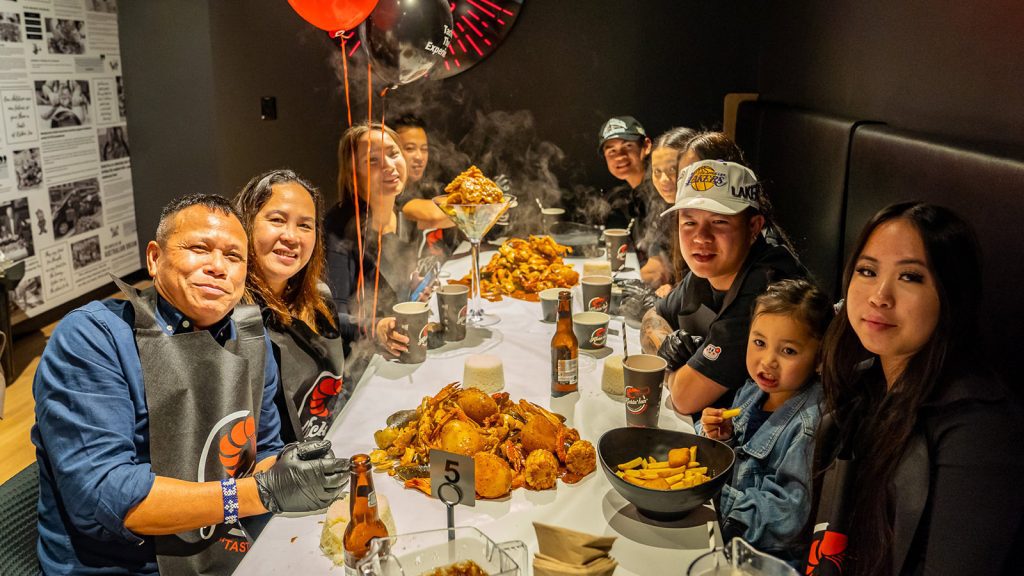
| Feeding a group with different tastes | Strong, since nobody has to negotiate a shared order |
| A light eater | Order a la carte, comfortably |
| After a long, social evening | Good, because the format rewards taking your time |
The strongest honest case for all you can eat seafood is discovery rather than quantity. Working out whether you actually prefer mussels to prawns, or how hot you like the sauce, is worth real money on future visits.
Read The Terms Before You Book
All you can eat offers almost always carry conditions, and they are usually reasonable. You just want to know them in advance rather than at the table.
What To Check
Things worth checking include any time limit on the sitting, whether the whole table has to participate, which items are included and which are charged separately, whether there is a charge for uneaten food left behind, and whether the deal runs on all days or only some.
None of those are unfair in themselves. A time limit is how a venue turns tables, and a waste charge exists because people order eight crabs and eat two. But they change the value calculation, so read them.
Australian Consumer Law prohibits false or misleading representations about the price or characteristics of a service, so what is advertised does have to match what is delivered. Separately, unfair terms in standard form consumer contracts are void, and since November 2023 it has been unlawful to apply or rely on them.
The practical version is simpler. Look up the current all you can eat terms before you book, because conditions and availability do change.
The Allergy Problem
Worth stating plainly, because an all you can eat format makes this harder rather than easier.
Shellfish allergy is more common in adults than in young children and reactions can include anaphylaxis. With shared pots, shared serving equipment and continuous turnover, cross contact is essentially guaranteed.
Australian food businesses must provide accurate allergen information when a customer asks for it, so ask before you commit rather than on the night.
If someone in your group has a seafood allergy, an all you can eat seafood venue is close to the worst possible choice, and there is no polite way to soften that.
Where To Try It In Brisbane
If you want to test the theory, Kickin’Inn’s Brisbane venue at Spring Hill sits on the CBD edge, with Strathpine covering the northern suburbs.
Check the menu and the terms first so you know what is included, then book ahead, because all you can eat sittings tend to have limited capacity and go early on weekends.
One last tip if you do go. Skip the bread, go lightly on the potatoes, start with whatever is most expensive, and pace yourself. The people who get the most out of it are the ones eating slowly and deliberately rather than attacking it.
The Short Version
- Judged purely on volume, all you can eat seafood is the hardest buffet format to win.
- Seafood is high protein and low energy density, so it fills you up cheaply.
- Whole crab yields as little as fourteen percent edible meat, and the rest is shell.
- Shelling slows you down, and slower eating reliably reduces how much people consume.
- Variety increases intake, so spread across the range rather than sticking to one item.
- Sides are the cheapest thing on offer and will fill you fastest.
- The real value is discovery, working out what you like before you order a la carte next time.
- Check time limits, inclusions, whole table rules and waste charges before booking.
- Advertised offers must not be misleading, and unfair standard terms are void.
- Cross contact is unavoidable, so an all you can eat seafood venue is a poor choice with a shellfish allergy in the group.
- In Brisbane, Spring Hill covers the city and Strathpine the north.
Go for the range and the long evening, not to beat the house. On that basis it is genuinely good value. On the other basis, the prawns are on the venue’s side.
Think you have what it takes to work at Kickin'Inn?
Fill out an expression of interest form here. We strive to respond to all applicants as promptly as possible. We look forward to hearing from you!